Hello and welcome!

Welcome!
This blog is an extension of The Home Maker's Corner. Regarding use of content: please see "the fine print" at the bottom of this page.

Showing posts with label Arab. Show all posts

Sunday, November 29, 2015

What About the Refugees? Part 2 – Some Biblical Examples


Here is Part 2 in the series on refugees.  This week we’re talking about a few biblical examples of refugees and what we can learn from them.

-----------------

In Part 1 on this series we discussed the history of immigrants and refugees who came to the U.S. in the past seeking a better life.  Some of them also brought ungodly or evil things with them.  We also talked about the Good Samaritan and the example that Jesus gave us through that parable.

This time we're going to talk about some biblical examples.


David In Gath

Because we need to be honest about the issue of refugees, it seemed like a good idea to think about the story of David when he and his men lived in Philistia as refugees for awhile when Saul was trying to murder David.

Continue Reading.

Sunday, November 22, 2015

What About the Refugees Anyway? – PART 1 - A Beginning and A Parable


This is a big issue right now with a lot being said about it.  I wasn’t sure if I should address it at first, but it is getting to be such a “big deal”, and I’ve seen so many things that disturbed me that I finally decided to do so.  As it turned out there’s a lot more to it from a biblical standpoint than I would have thought.  Here is PART 1 of a series.

What About the Refugees Anyway? PART 1 - A Beginning and A Parable

James 2:13 For he shall have judgment without mercy,
that hath shewed no mercy; and mercy rejoiceth against judgment.

There has been a lot of emotion, animosity and heated opinions about the refugee situation.  Sadly, there has been a lot that, from my perspective, doesn't seem to reflect the mind of Christ - and I'm speaking about the Christian context here.  (I don't expect that from the world.)  Quite a lot of this is probably because modern right-wing and conservative politics have been made "the norm" and essential among Evangelicals and Fundamentalists.  But, what do you do when some, or the majority of them, take a position on a significant issue that is contrary to scripture and the example of Jesus Christ?

Conservative politics and many conservative Christians say that Syrian refugees are very dangerous and must be refused.  There are cries for our safety, accusations that most of them are "young men", and a fairly broad disregard of all the other refugees from other countries that need help.  We've heard similar claims about the Mexican situation, except that the "loss of jobs" has been a major complaint on that.

First of all, I want to say that I am in no way trying to "solve the problem" here.  I don't have a perfect answer for a situation as complicated as this.  I actually doubt that anyone really does.  Messy situations usually require multi-faceted answers.

Continue Reading.


Tuesday, May 27, 2014

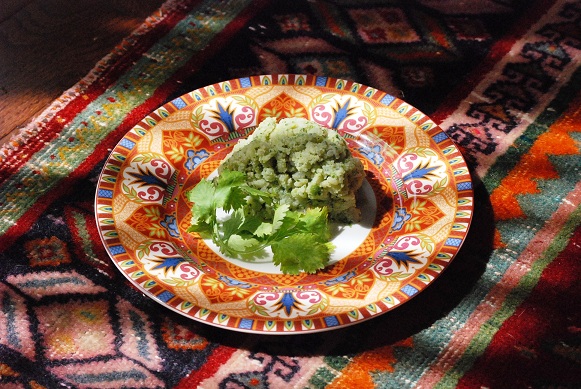
Tabbouleh - A Middle Eastern Salad


Another rerun from the early days of this blog.  This was first posted on the afternoon of Feb. 26, 2009. :-)
----------------

We started making and eating our own Middle Eastern food sometime while I was in my teens. This refreshing parsley salad quickly became a family favorite. We shared it with our church family and it was a hit there too. In fact, one girl who was finicky about "green food" actually found that she loved this salad so much she started making it for herself on a regular basis! :-) That's pretty high praise. Parsley, olive oil, whole grain, and more - what a great tasting, and great looking health food!
[The photo was taken by my friend Elisabeth who also made this bowl of tabbouleh.]

Tabbouleh tastes great served immediately or refrigerated. Leftover tabbouleh should be refrigerated, of course, and eaten up within 4 days or so as it begins to get soggy.  Try adding it to a sandwich in place of lettuce and tomato.  It's really good in a pita bread sandwich, maybe combined with some leftover shishkabob or grilled meat.

Tabbouleh

2 bunches of fresh parsley
2 tablespoons of fresh mint
1 small onion
1 large tomato, diced  (or 2 large Roma tomatoes)
1/2 a small cucumber, diced
1/2 cup bulgur
1 tablespoon salt
1/2 teaspoon allspice
6 tablespoons lemon juice (preferably fresh)
6 tablespoons extra virgin olive oil

Soak bulghur in water for 1 1/2 to 2 hours until soft. (This process can be shortened by using hot water. Just be sure it is cooled before adding to the salad.)  Squeeze out excess water using a metal strainer and your hand.

Wash parsley and discard the stems. Finely chop parsley, onion and mint. This can be done in a food processor very quickly.  (Note: if you do not have fresh mint you may use 1 Tbl. of dry mint.)

Combine all the vegetable ingredients and the bulgur in a large serving bowl. Add the remaining ingredients and mix well. Adjust the lemon juice and salt to taste.

Thursday, July 28, 2011

History In Food - Mesopotamia


Photo property of The Silk Road Gourmet.

Acts 7:2 And he said, Men, brethren, and fathers, hearken; The God of glory appeared unto our father Abraham, when he was in Mesopotamia, before he dwelt in Charran, 

My family has had an interest in foreign foods for a long time. Here are some interesting recipes that will allow you to eat a little history. The majority are from Mesopotamia, the cradle of civilization, but there are some others as well. (Note: Disclaimer on some ingredients. If you really want to make the recipe, try substituting something that seems like a good alternative.)

From The Silk Road Gourmet:  “The worlds' most ancient recipe collection was actually found on cuneiform tablets from Ancient Ur. These are currently at the Yale Library. Here are some adaptations.” So, here are some recipes that Abram and Sarai might have eaten, more or less, when they lived in Ur of the Chaldeas! How about that? :-)
Lamb with Licorice and Juniper Berries
Lamb and Carob Stew
Roasted Barley and Herb Pilaf
Mersu with Cheese
Mashed Turnips with Herbs
Mersu
Mesopotamian Wildfowl Pie
Leavened Bread
Pork Tenderloin with Licorice

Babylonian Apricot Jewels – I’m not sure why these are called Babylonian. There isn’t much explanation here. But, they look and sound good (with some modification), and apricots are an ancient food in that area.

Date Cookies – Why these Mesopotamian/Iraqi cookies are listed at an Asian site, I am not sure, but here they are, nonetheless.

Mesopotamian Barley, Lentil and Tahini Soup

Cooking Ancient Recipes – This collection includes two other areas of the ancient times as well as Mesopotamia. Just a word of warning: one of the recipes calls for blood. We, as Christians, have been forbidden to eat blood. Acts 15:28 For it seemed good to the Holy Ghost, and to us, to lay upon you no greater burden than these necessary things; 29 That ye abstain from meats offered to idols, and from blood, and from things strangled, and from fornication: from which if ye keep yourselves, ye shall do well. Fare ye well.

I hope you enjoy trying some of these recipes out and learning something about this part of the world that is so important to the history both of the world and of the Bible.

Monday, January 24, 2011

Fast Method Baklava

Here is a recipe for baklava that does not require the tedious method of layering butter and fillo dough sheet by sheet.  This is the only kind I’ve ever made and it always turns out well.  It is a family favorite!

I recommend making the syrup ahead of time, but if you do not remember, be sure to let the baklava cool completely before pouring the warm syrup over it.  Either the syrup or the baklava should be warm, but never both according to what I read.  For large batches of baklava it is recommended to let it cool first and put the warm syrup on later.  I have done it both ways, and they both work.
Some recipes call for unsalted butter, but I’ve used salted most of the time and it tasted fine.  The recipe below is actually a combination of two different recipes.  This is approximately how I made it the last time.
--------------------------------------------
1 pk. of fillo dough (about 20 – 30 sheets)
1 lb. butter, melted and with the solids skimmed off the top
3 - 4 C. ground walnuts (or pecans or unsalted pistachios)
1/2 C. sugar
2 Tbl. melted butter (I just take this out of the amount melted above.)
2 tsp. ground cinnamon
Honey Syrup
Preheat oven to 450F.  Brush 9 x 13 x 2-inch cake pan with butter.  Place half the fillo dough in the pan (about 10-15 sheets).  Spread all of filling mixture evenly over it.  Cover with remaining half of fillo sheets.  Cut into diamond shapes* using a good, sharp knife.  Spoon the melted (or clarified) butter over it making sure to  get it in all the cut lines and around the edges.  NOTE: Do not use the milky stuff in the bottom of the pan – only the clearer, golden colored part that looks like oil.
Bake in 450F oven for 8 minutes.  Turn off the oven and leave the baklava in the oven for 45 more minutes.  Do not open the oven during this time.
Remove from oven and spoon cooled syrup on the hot baklava making sure to cover all areas including around the edges, as with the butter.  It may be necessary to re-cut the baklava before removing it from the pan.
Honey Syrup
2/3 C. honey
1/3 C. sugar
3/4 C. water
Juice from 1 lemon
3 whole cloves
1 cinnamon stick, 3 inches long
Mix honey, sugar, water and spices in saucepan over medium heat.  Bring to a boil.  Add lemon juice and cook for about 15 minutes over medium heat.  Remove from heat and cool completely.  Remove cloves and cinnamon before spooning over baklava.
You may increase or reduce the syrup based on your preferences.
------
*To cut baklava into diamond shapes, cut straight lines across the 9” width of the pan.  Then cut diagonal lines from the end of one horizontal cut to the end of another on the opposite side of the pan going in a straight line.  Here is a link to a page that shows a slightly different cutting pattern, but it’s the same idea, and hopefully it will help.  If you don’t feel confident of this, just cut it in smallish squares. 
The diamond pattern tends to make some rather large pieces, so recently I’ve cut mine into triangles and squares instead.  If you do triangles try not to cut them too small as it can make them hard to handle when you remove them from the pan.
=========================
Note: If you do not have whole cloves or cinnamon, you may put in ground.  The cloves would probably be about 1/4 tsp. and the cinnamon 2 tsp.  This is an estimate since I haven’t done this.  But, it will make your baklava darker.  The point in using it whole is to get the taste without the color.  It’s mostly an appearance thing, I think.
If you want to buy whole cloves or cinnamon but the price at your local grocery is prohibitive, I suggest checking out an Indian grocery store or food shop.  A lot of larger cities have them, and we have gotten whole cloves and cinnamon at such places for much better prices that can usually be found in regular grocery stores.  You may find other herbs and spices that you use cheaper there as well.  Also, if you have an electric coffee grinder, you can easily grind up the whole cloves or cinnamon into powder if you want to later.  Just be sure to clean the grinder well after using it for spices or herbs.  (My mom actually keeps two – one for coffee and one for herbs and such.  She watches for coffee grinders at second hand stores.)